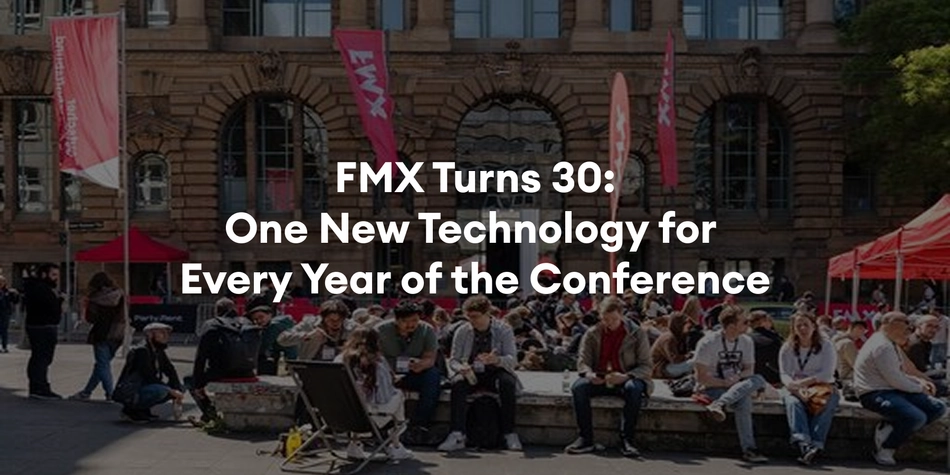
FMX was born in 1994, when Filmakademie Baden-Wuerttemberg decided to host a small student fair in Stuttgart. Thirty years later, it’s one of the biggest conferences in animation, VFX, and digital media. A lot has changed since then.
To celebrate, we put together a timeline of the technologies, tools, and breakthroughs that shaped our industry, one for each year of the conference’s existence. Some are software launches. Some are open standards. Some are moments where everything shifted. Together, they tell the story of how we got from SGI workstations to AI-generated video.
1994: 3D Studio R4
The year FMX started was also the year Autodesk released 3D Studio R4, the last DOS version before the jump to Windows. It introduced inverse kinematics and a scripting language, and it was the version that put affordable 3D software on the map for studios that couldn’t afford SGI machines. The seeds of what would become 3ds Max were planted right here.
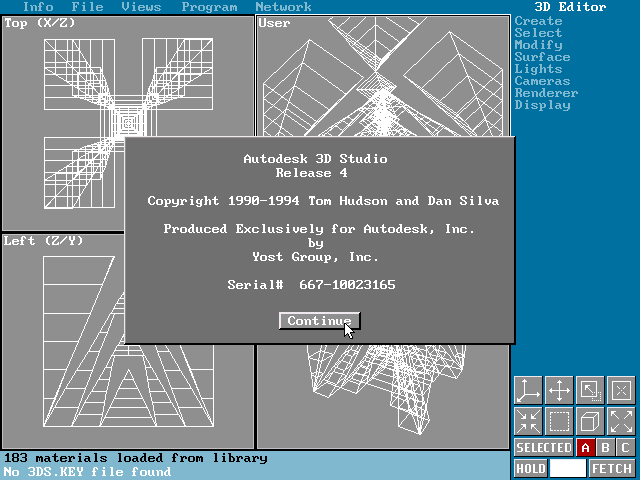
Image credits: Autodesk Forums
1995: Toy Story
Pixar released Toy Story, the first fully computer-generated feature film. It proved that CG could carry an entire movie, not just a VFX shot. The ripple effects on the industry were enormous and still ongoing.
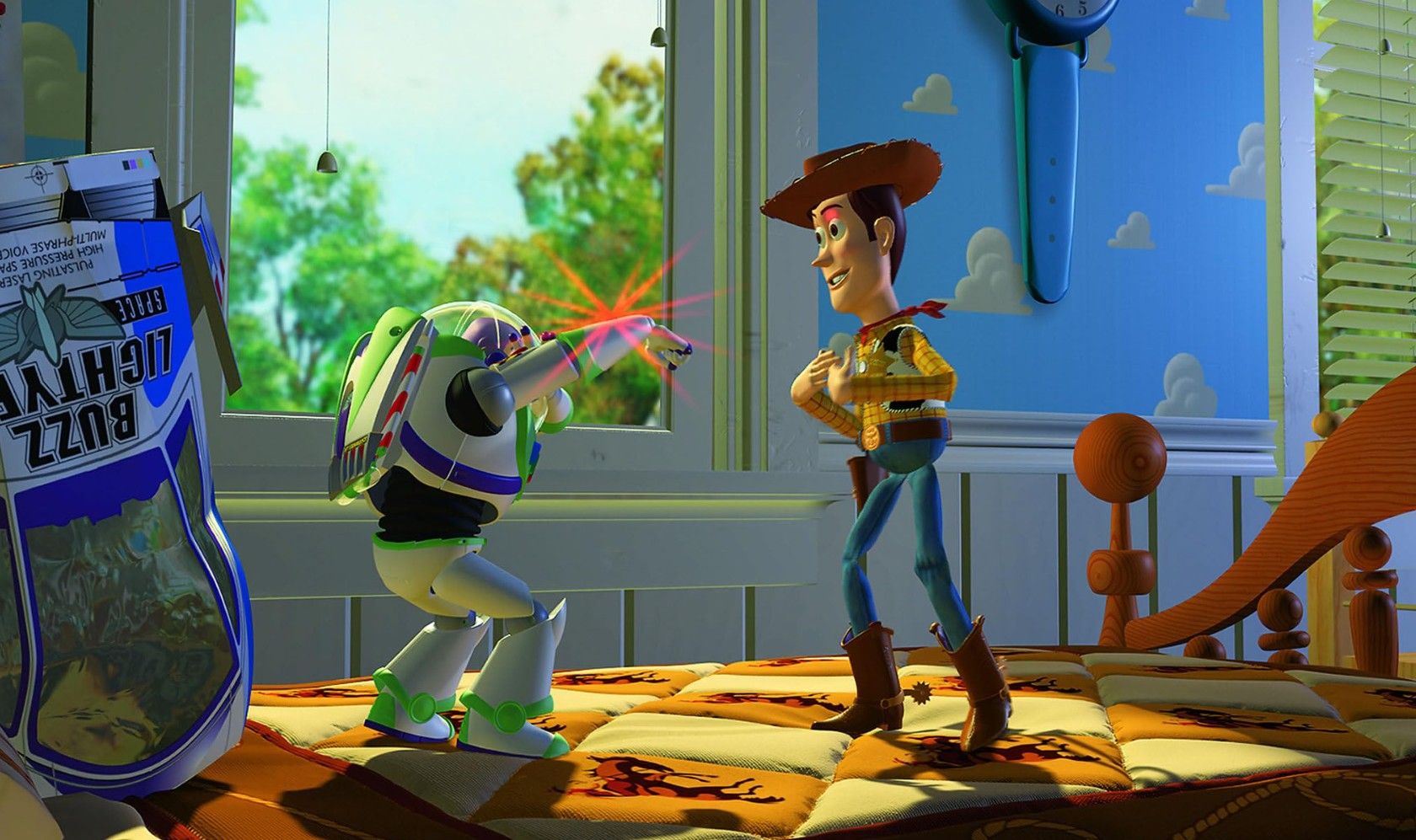
Toy Story - Credits: Pixar
1996: 3D Studio MAX and Houdini
Two big launches in one year. Autodesk moved 3D Studio to Windows NT with the first release of 3D Studio MAX, opening up real 3D production on PCs. Meanwhile, Side Effects Software released Houdini 1.0, introducing the procedural workflow that would eventually dominate VFX. Both tools are still going strong 30 years later.
1997: Titanic and CG Water
James Cameron’s Titanic pushed visual effects into new territory. Led by Digital Domain, the production combined large-scale miniatures with CG set extensions, motion-captured digital extras, and the first truly realistic CG ocean in a feature film. The work won the Academy Award for Best Visual Effects and proved that digital tools could create photoreal environments at a scale audiences had never seen. Titanic’s VFX pipeline, which involved over sixteen studios working in parallel, also foreshadowed the distributed production model that would become standard in the industry.
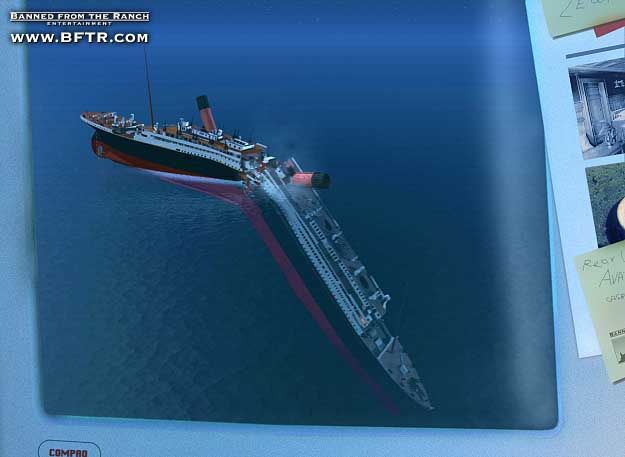
Image Credits: Van Ling - derived from www.fxguide.com
1998: Maya 1.0
Alias|Wavefront released Maya, a new 3D application built from the ground up with MEL scripting and a deeply customizable architecture. Studios quickly adopted it for character animation and VFX, and it became a pipeline cornerstone at places like ILM and Disney. It remains one of the industry’s core tools.
1999: The Matrix and Bullet Time
The Matrix introduced “bullet time,” a combination of still cameras, interpolation, and CG that changed how audiences and filmmakers thought about visual effects. It wasn’t just a technique, it was a cultural moment that made VFX a selling point for films.
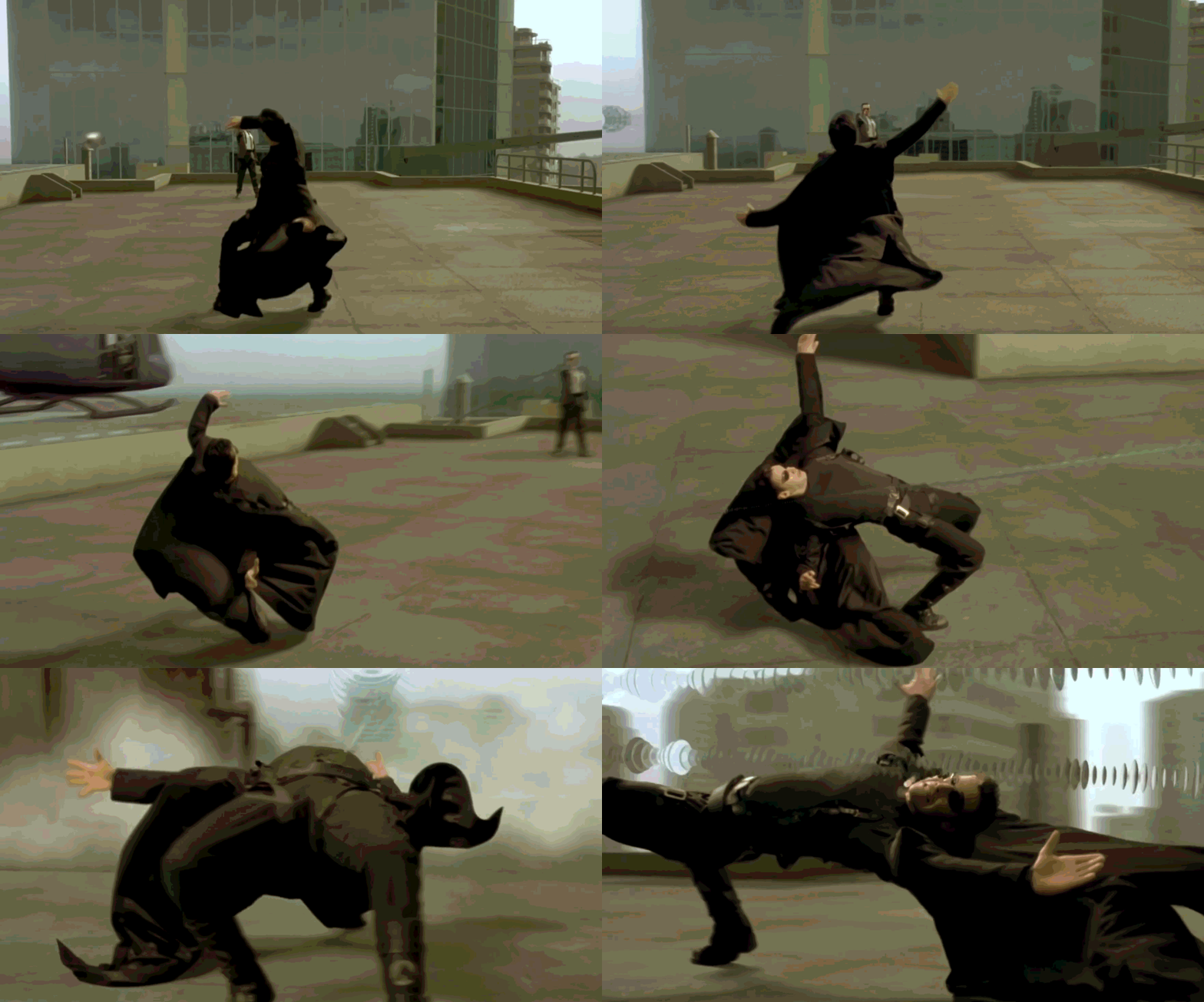
The Matrix - Credits: Warner Bros. Production
2000: Softimage|XSI
Softimage launched XSI, a complete rewrite of Softimage|3D with a modern architecture, non-linear animation, and interactive rendering. It pushed the industry forward technically, even if it would eventually lose the market share battle to Maya and Max.
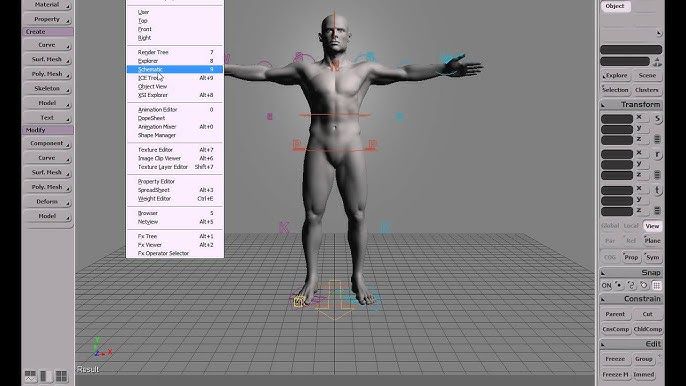
Softimage XSI Interface Overview - Credits: YouTube
2001: MASSIVE for The Lord of the Rings
Weta Digital developed MASSIVE, an AI-driven crowd simulation system, for The Lord of the Rings. The Battle of Helm’s Deep featured tens of thousands of autonomous digital soldiers, each making their own decisions. Crowd simulation became a discipline of its own.
2002: V-Ray 1.0
Chaos Group released V-Ray 1.0 for 3ds Max, bringing fast and accessible global illumination to a huge user base. It quickly became the go-to renderer for architectural visualization and eventually expanded across multiple platforms. For many archviz artists, V-Ray is still the default choice.
2003: OpenEXR Goes Open Source
ILM released OpenEXR as open-source software after years of internal development. The high dynamic range image format gave the entire industry a standard way to store floating-point image data with multiple channels, and it’s still the backbone of VFX compositing pipelines today.
2004: ZBrush 2.0
Pixologic released ZBrush 2.0 with the introduction of HD Geometry, making digital sculpting with millions of polygons practical for production. It changed how characters, creatures, and environments were modeled across film, games, and visualization.
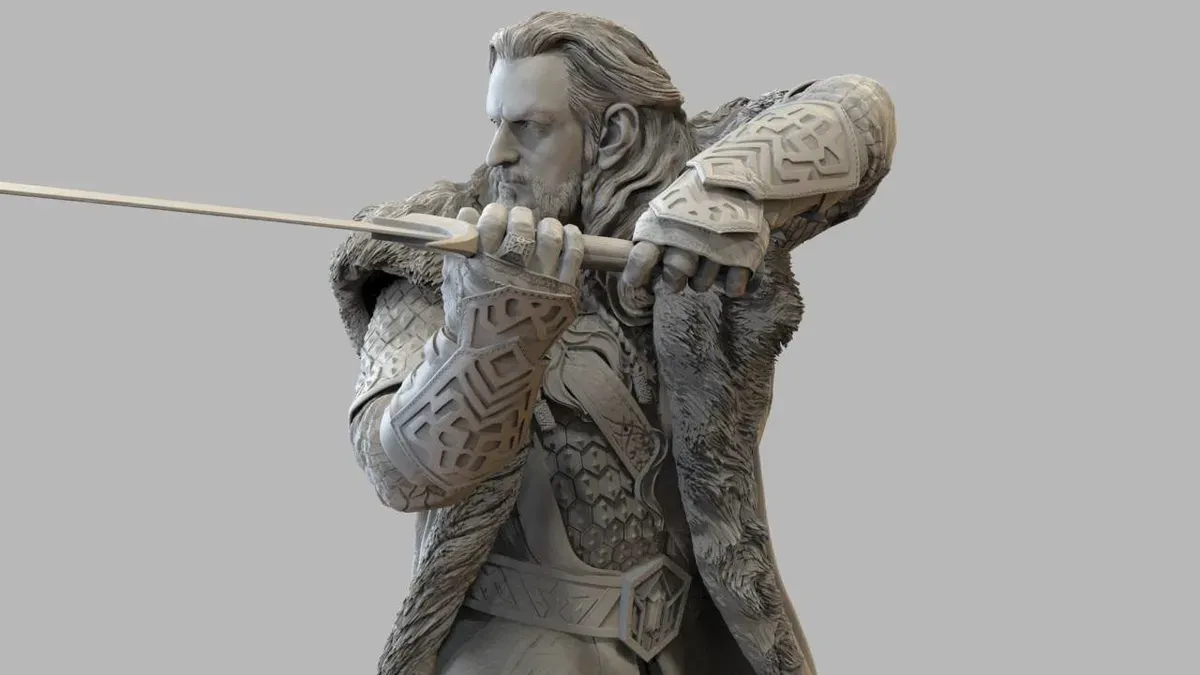
Madeleine Scott-Spencer's Thorin sculpt as part of Weta's The Hobbit collection - Credits: www.creativebloq.com
2005: Google Earth
Google launched Google Earth in June 2005, putting satellite imagery and 3D terrain into the hands of anyone with a desktop computer. Built on technology from Keyhole, Inc., the free application let users fly from space to street level for the first time. It was downloaded over 100 million times in its first week.
For architects, urban planners, and visualization professionals, Google Earth changed how people understood and communicated about real-world locations. It also set the stage for how we think about digital mapping, geospatial data, and eventually tools like photogrammetry and 3D city models.
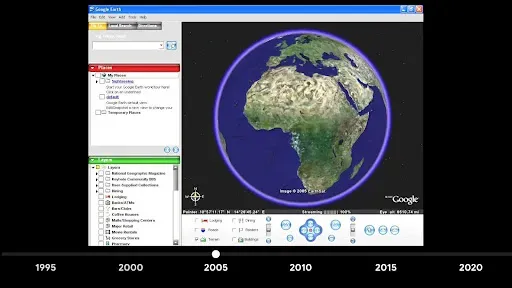
Google Earth’s interface in 2005 - Credits: Google Blog
2006: Unreal Engine 3
Epic Games released Unreal Engine 3, which powered a generation of games and also started showing up in visualization and previs work. The idea that a real-time engine could produce images approaching offline render quality was still years away, but UE3 planted the seed.
2007: Nuke Goes Commercial
Foundry productized Nuke, the compositing tool originally developed at Digital Domain in the 1990s. Within a few years, Nuke replaced Shake as the industry standard compositor for VFX. Its node-based workflow set the standard for how compositing is done today.
2008: Ptex from Disney
Walt Disney Animation Studios developed Ptex, a texture mapping system that eliminated the need for UV assignment. It was open-sourced and adopted across the industry, simplifying one of the most tedious parts of the 3D pipeline.
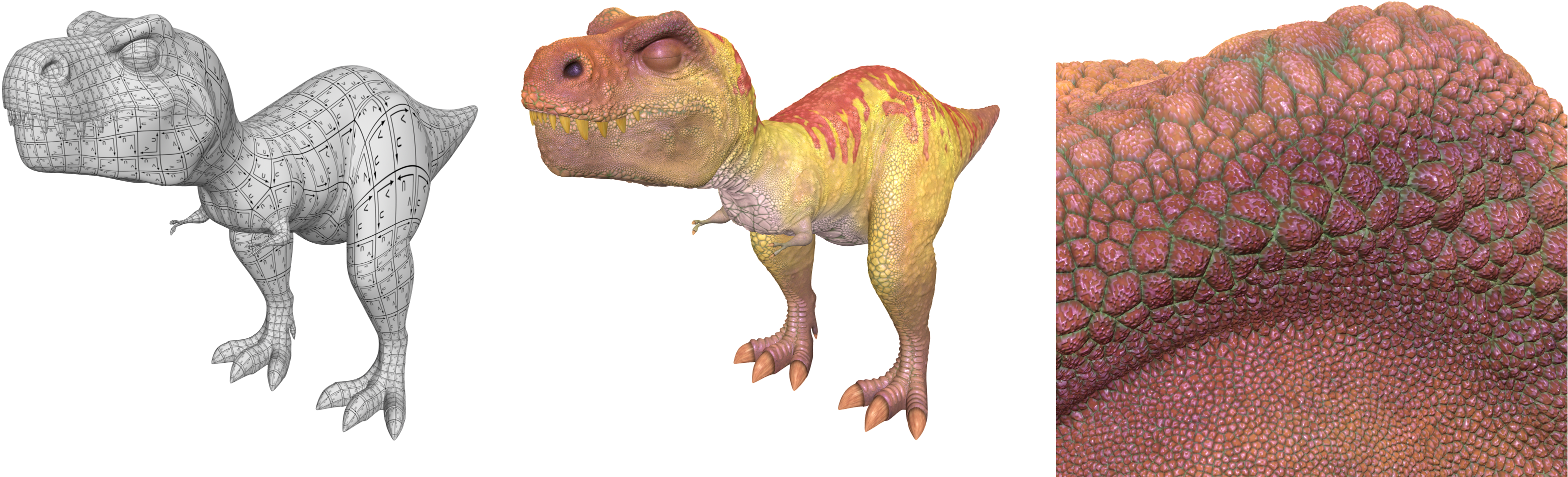
Ptex - Credits: Walt Disney Animation Studios
2009: Avatar and Virtual Production
James Cameron’s Avatar pushed performance capture, virtual cameras, and real-time previsualization into uncharted territory. The film demonstrated that directors could work inside a virtual environment on set, a concept that would evolve into what we now call virtual production.
2010: Substance Designer
Allegorithmic (now Adobe) released Substance Designer, introducing procedural, node-based material creation. It changed how textures and materials were built, moving from hand-painted maps to parametric systems that could be reused, adjusted, and scaled across projects.
2011: Octane Render
OTOY released Octane Render, one of the first fully GPU-accelerated unbiased renderers. It proved that GPUs could handle production rendering, not just viewport shading, and kicked off the GPU rendering revolution that now includes Redshift, V-Ray GPU, and others.
2012: Alembic 1.0
Sony Pictures Imageworks and ILM finalized and open-sourced Alembic, a standard format for baked geometry and animation data exchange between applications. It solved a real problem: getting complex animated data from one tool to another without losing anything.
2013: Substance Painter
Allegorithmic released Substance Painter, making 3D texture painting intuitive and production-ready. It became the standard for PBR texturing across games, film, and archviz, and helped push physically based rendering into the mainstream.
2014: Unreal Engine 4 Goes Free
Epic Games made Unreal Engine 4 free for everyone, charging only a royalty on commercial products. This was a game-changer (literally). Studios in archviz, film previs, and interactive design suddenly had access to a world-class real-time engine at no upfront cost.
2015: Pixar Open-Sources USD
Pixar announced and later released Universal Scene Description (USD) as open source. USD provides a standard way to describe complex 3D scenes, including layering, referencing, and variants. It’s now becoming the backbone of modern pipelines across VFX, animation, and increasingly archviz.
2016: VR Goes Mainstream
The Oculus Rift and HTC Vive launched within weeks of each other, bringing consumer VR to market. For archviz, this opened up a new way to present spaces to clients. For the broader industry, it created new demand for real-time content and spatial design skills.
2017: AI Denoising
NVIDIA introduced AI-powered denoising for production renderers, drastically reducing the number of samples needed for clean images. Render times dropped across the board. Both V-Ray and Arnold integrated denoising soon after, and it’s now a standard part of most rendering workflows.
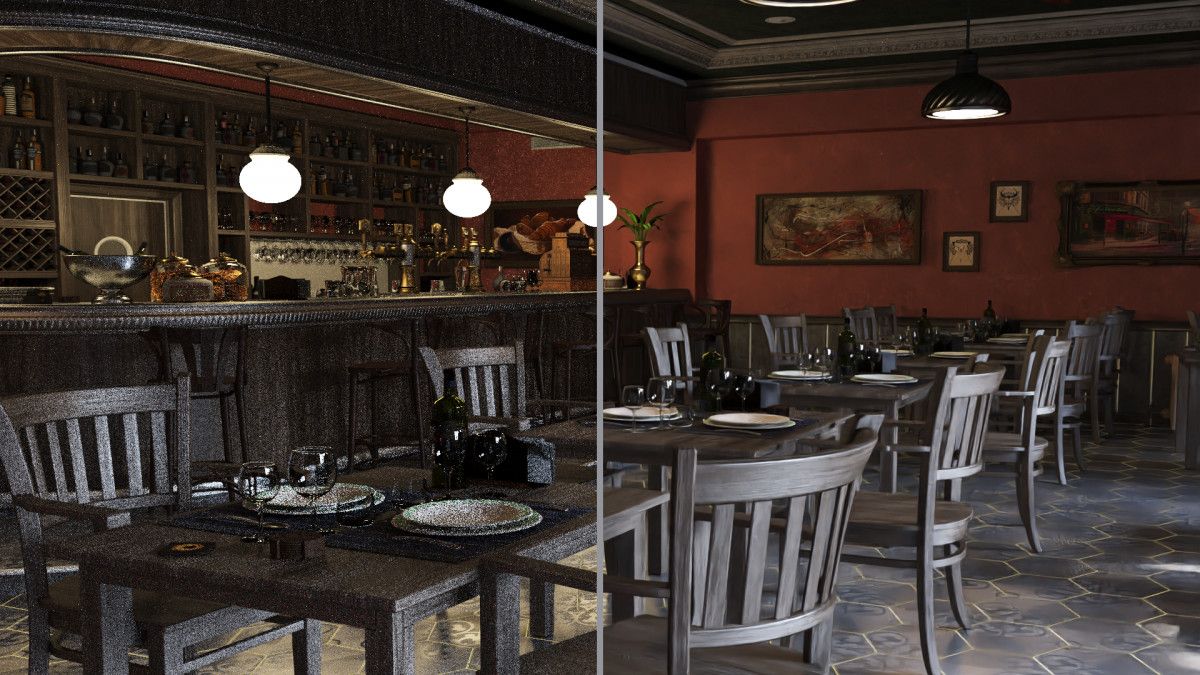
Credits: www.techpowerup.com
2018: NVIDIA RTX and Real-Time Ray Tracing
NVIDIA launched the RTX architecture with dedicated hardware for real-time ray tracing. For the first time, ray-traced reflections, shadows, and global illumination could run in real time on consumer GPUs. It blurred the line between offline and real-time rendering in ways we’re still figuring out.
2019: Quixel Megascans Goes Free with Unreal
Epic Games acquired Quixel and made the entire Megascans library (thousands of photogrammetry-scanned materials, objects, and environments) free for use with Unreal Engine. The quality bar for real-time environments jumped overnight.
2020: NeRF
Researchers at UC Berkeley published the NeRF (Neural Radiance Fields) paper, introducing a method for creating photorealistic 3D scenes from a set of photographs using neural networks. It kicked off a wave of research into neural scene representation that’s still accelerating.
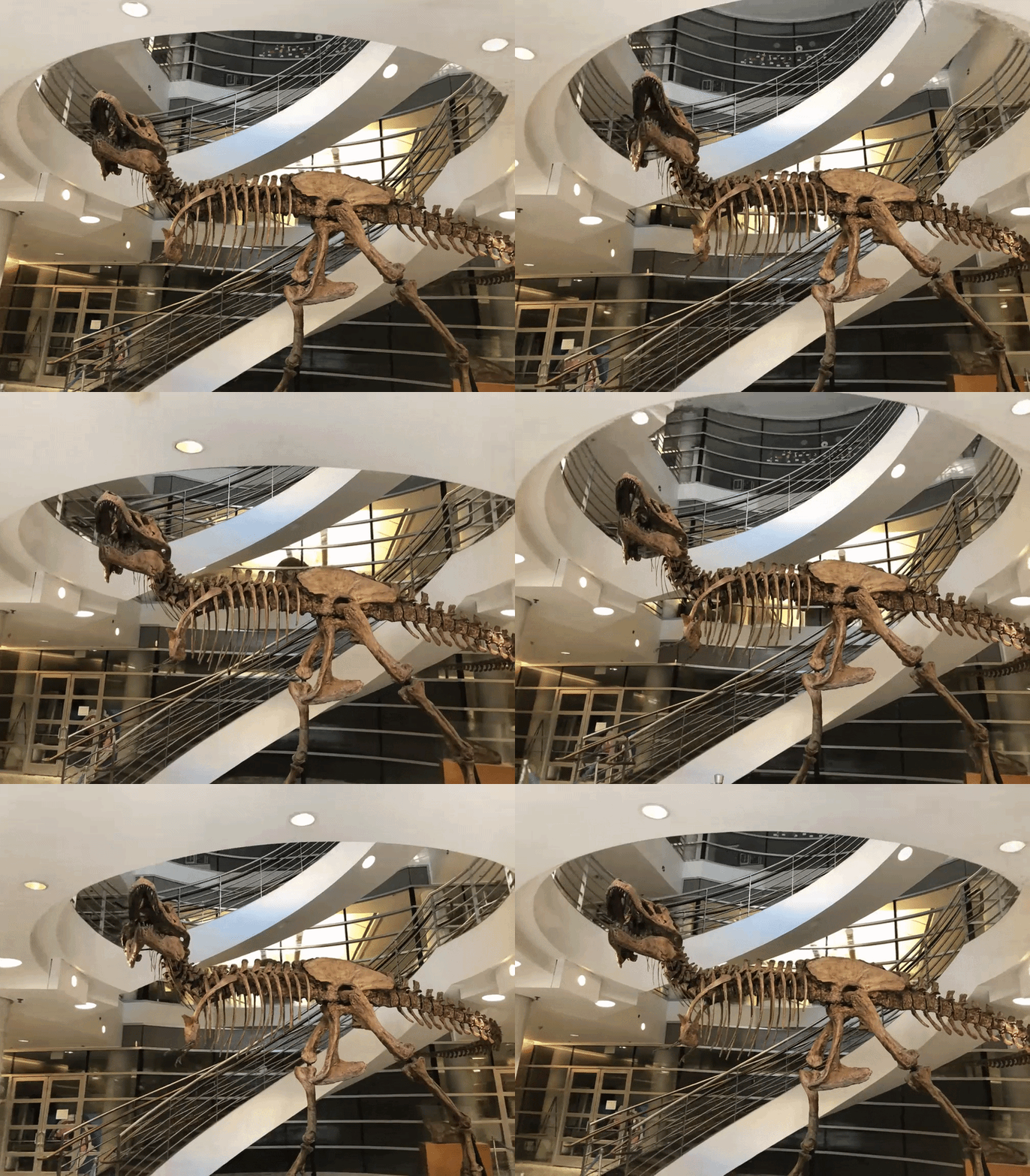
Credits: Mildenhall, Srinivasan, Tancik, Barron, Ramamoorthi, and Ng (2020)
2021: DALL-E and the Start of AI Image Generation
OpenAI released DALL-E, demonstrating that AI models could generate images from text descriptions. The results were rough by today’s standards, but the concept was a clear signal that AI would reshape creative production.
2022: Stable Diffusion and Midjourney
Stable Diffusion was released as open-source software, and Midjourney launched its public beta. AI image generation went from research curiosity to production tool almost overnight. The debates about creativity, authorship, and workflow integration started here and haven’t stopped.
2023: 3D Gaussian Splatting
Researchers introduced 3D Gaussian Splatting as a real-time alternative to NeRFs for photorealistic scene reconstruction. It offered faster rendering and easier editing, making neural 3D capture more practical for production use, including site capture in archviz.
2024: Generative Video
OpenAI’s Sora and other models brought generative AI to video, producing coherent clips from text prompts. The technology is still early and full of limitations, but it’s already sparking real conversations about how animation, previs, and marketing content might change.
2025: RenderMan 27 and Blender 5.0
Two major releases defined 2025. Pixar shipped RenderMan 27, described as the most significant update in over a decade. RenderMan XPU, the hybrid CPU/GPU render engine, became production-ready for final-frame rendering for the first time, marking a fundamental shift in how Pixar and the wider industry approach rendering. Meanwhile, the Blender Foundation released Blender 5.0, kicking off a new two-year release cycle with major updates to Geometry Nodes, color management (including ACES support), and compositing. Blender also announced plans to bring the full software to iPad, signaling a future where professional 3D tools go truly portable.
What’s Next?
Thirty years of FMX, and the tools keep coming. Some of them are discussed at this year’s conference: the Softimage retrospective, generative video in production, AI pipelines, virtual production workflows, and tools like USD and Unreal that keep evolving.
If there’s one takeaway from looking at this list, it’s that the pace of change keeps accelerating. The jump from 3D Studio R4 to Maya took four years. The jump from NeRF to real-time Gaussian Splatting took three. The jump from DALL-E to production-grade AI tools took less than two.
We’re proud to be a partner of FMX 2026 and to be part of this community. Come visit us at the Pulze stand (booth 1.3) in Stuttgart, May 5 to 7. Whether you’ve been coming to FMX for 30 years or this is your first time, there’s always something new on the road ahead.
FMX 2026 runs May 5 to 7 on site in Stuttgart. Browse the full FMX 2026 schedule and get your tickets at fmx.de.
Cover image: FMX 2025 archive